
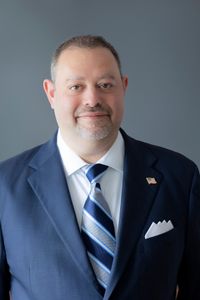
Sean Joseph Kirrane
About Sean Joseph Kirrane
Sean Kirrane (Republican Party) is running for election to the U.S. House to represent New Jersey's 5th Congressional District. He is on the ballot in the Republican primary on June 2, 2026.
Issues Ledger
Support should feel like a public seal of approval. Nonresponse should feel visibly costly. Click Ping to directly push for an answer on any issue that's important to you.
Candidate on the Issues
[{"question": "Ballotpedia survey responses", "answer_html": "<p>See also: <a href=\"/Ballotpedia%27s_Candidate_Connection\">Ballotpedia's Candidate Connection</a></p>\n<div class=\"row\"><div class=\"col-xs-10 col-md-6 col-xs-offset-1 col-md-offset-3\"><p><a href=\"https://ballotpedia.org/Ballotpedia%27s_Candidate_Connection\"><img align=\"middle\" alt=\"Candidate Connection\" src=\"https://cdn.ballotpedia.org/images/8/88/Candidate_Connection_Logo.png\" width=\"90%\"/></a></p></div></div>\n<p>Sean Kirrane completed <a href=\"/Ballotpedia%27s_Candidate_Connection\">Ballotpedia's Candidate Connection</a> survey in 2025. The survey questions appear in bold and are followed by Kirrane's responses.</p>\n<p><span class=\"expand-all\">Expand all</span> | <span class=\"collapse-all\">Collapse all</span></p>\n<div aria-multiselectable=\"true\" class=\"panel-group\" id=\"accordion\" role=\"tablist\"><div class=\"panel panel-default\"><div class=\"panel-heading\" data-toggle=\"collapse\" href=\"#collapse-bio-361801-2025-11-06\" id=\"heading-bio-361801-2025-11-06\" role=\"tab\"><p class=\"panel-title\" style=\"font-size: 14px;font-weight: 600;\"><a aria-controls=\"collapse-bio-361801-2025-11-06\" aria-expanded=\"false\" class=\"collapsed\" data-parent=\"#accordion\" data-toggle=\"collapse\" href=\"#collapse-bio-361801-2025-11-06\" role=\"button\"><i class=\"fa fa-chevron-right pull-right\"></i><i class=\"fa fa-chevron-down pull-right\"></i>\t\t\t\tWho are you? Tell us about yourself.\t\t\t</a></p></div><div aria-labelledby=\"heading-bio-361801-2025-11-06\" class=\"panel-collapse collapse\" id=\"collapse-bio-361801-2025-11-06\" role=\"tabpanel\"><div class=\"panel-body\" style=\"max-height: 500px; overflow-y: scroll;\"><div class=\"answers-container\"><span style=\"font-size: 14px;\">\t\t\t\tI’m Sean Kirrane — a lifelong New Jerseyan, husband, and father who’s spent more than twenty years fixing broken systems in healthcare, finance, and technology. I didn’t come up through politics; I came up through the real world, where accountability matters and failure isn’t an option. I’ve led billion-dollar transactions, rebuilt bankrupt hospitals, and turned around organizations that others had written off. When leadership collapsed, I was the person they called to restore order, stabilize the numbers, and rebuild trust.\r\n<p>Now I’m running for Congress in New Jersey’s 5th District because Washington looks exactly like the failing institutions I’ve spent my career fixing — overleveraged, overregulated, and underperforming. Our government doesn’t have a money problem; it has a management problem.\r\n</p><p>My campaign is about bringing real-world discipline, execution, and results to public service. I believe government should do fewer things — and do them well. I’m not running to score political points; I’m running to solve problems that actually affect families’ lives — affordability, healthcare, and stability.\r\n</p>\nI’m ready to serve New Jersey with the same drive and precision that’s defined my entire career — focusing on outcomes, not rhetoric, and delivering results people can see and feel.\t\t\t</span></div></div></div></div><div class=\"panel panel-default\"><div class=\"panel-heading\" data-toggle=\"collapse\" href=\"#collapse-key-message-361801-2025-11-06\" id=\"heading-key-message-361801-2025-11-06\" role=\"tab\"><p class=\"panel-title\" style=\"font-size: 14px;font-weight: 600;\"><a aria-controls=\"collapse-key-message-361801-2025-11-06\" aria-expanded=\"false\" class=\"collapsed\" data-parent=\"#accordion\" data-toggle=\"collapse\" href=\"#collapse-key-message-361801-2025-11-06\" role=\"button\"><i class=\"fa fa-chevron-right pull-right\"></i><i class=\"fa fa-chevron-down pull-right\"></i>\t\t\t\tPlease list below 3 key messages of your campaign. What are the main points you want voters to remember about your goals for your time in office?\t\t\t</a></p></div><div aria-labelledby=\"heading-key-message-361801-2025-11-06\" class=\"panel-collapse collapse\" id=\"collapse-key-message-361801-2025-11-06\" role=\"tabpanel\"><div class=\"panel-body\" style=\"max-height: 500px; overflow-y: scroll;\"><div class=\"answers-container\"><span style=\"font-size: 14px;\"><ul><li>Government should do fewer things — and do them well.\r\nI believe in a smaller, smarter federal government that delivers measurable results instead of empty promises. Every dollar collected from taxpayers should reach citizens — not bureaucracy. I’ll fight to cap administrative costs at 10% across federal programs, eliminate waste, and restore accountability. Government must focus on outcomes, not politics — strengthening affordability, security, and opportunity for working Americans through efficiency and execution, not endless expansion.</li><li>Preserve. Protect. Progress.\r\nThese three words define my campaign and my philosophy of leadership. We must preserve the values that built America — hard work, family, and community. We must protect citizens’ rights, safety, and dignity — especially the most vulnerable among us: seniors, veterans, and working families. And we must progress toward a stronger, fairer future by restoring affordability, reducing government waste, and investing in innovation. My vision is a results-based conservatism that honors tradition while creating opportunity for the next generation.</li><li>Real-World Leadership for a Broken Washington.\r\nI’ve spent my career fixing what others couldn’t — from turning around bankrupt hospitals to leading multi-billion-dollar financial transactions. I know how to execute under pressure, balance budgets, and rebuild trust. Washington doesn’t need more politicians; it needs operators who deliver measurable results. My experience across healthcare, finance, and technology has taught me that leadership means accountability, not rhetoric. I’ll bring that same execution mindset to Congress — to stabilize what’s failing, protect what works, and deliver results for New Jersey families.</li></ul></span></div></div></div></div><div class=\"panel panel-default\"><div class=\"panel-heading\" data-toggle=\"collapse\" href=\"#collapse1-361801-2025-11-06\" id=\"heading1-361801-2025-11-06\" role=\"tab\"><p class=\"panel-title\" style=\"font-size: 14px;font-weight: 600;\"><a aria-controls=\"collapse1-361801-2025-11-06\" aria-expanded=\"false\" class=\"collapsed\" data-parent=\"#accordion\" data-toggle=\"collapse\" href=\"#collapse1-361801-2025-11-06\" role=\"button\"><i class=\"fa fa-chevron-right pull-right\"></i><i class=\"fa fa-chevron-down pull-right\"></i>\t\t\t\tWhat areas of public policy are you personally passionate about?\t\t\t</a></p></div><div aria-labelledby=\"heading1-361801-2025-11-06\" class=\"panel-collapse collapse\" id=\"collapse1-361801-2025-11-06\" role=\"tabpanel\"><div class=\"panel-body\" style=\"max-height: 500px; overflow-y: scroll;\"><div class=\"answers-container\"><span style=\"font-size: 14px;\">\t\t\t\tI’m focused on restoring affordability, accountability, and stability for working Americans. My three priorities form a unified plan for national renewal: housing, through the American Citizens’ Primary Residence Mortgage Act, which protects homeownership for U.S. citizens; healthcare, through the American Citizens’ Health Insurance Act, which guarantees affordable baseline coverage while preserving free-market choice; and homelessness, through the Homeless Solutions and Stability Act, which replaces unsafe shelters with treatment-based, results-driven recovery. Real reform — not rhetoric.\t\t\t</span></div></div></div></div><div class=\"panel panel-default\"><div class=\"panel-heading\" data-toggle=\"collapse\" href=\"#collapse2-361801-2025-11-06\" id=\"heading2-361801-2025-11-06\" role=\"tab\"><p class=\"panel-title\" style=\"font-size: 14px;font-weight: 600;\"><a aria-controls=\"collapse2-361801-2025-11-06\" aria-expanded=\"false\" class=\"collapsed\" data-parent=\"#accordion\" data-toggle=\"collapse\" href=\"#collapse2-361801-2025-11-06\" role=\"button\"><i class=\"fa fa-chevron-right pull-right\"></i><i class=\"fa fa-chevron-down pull-right\"></i>\t\t\t\tWho do you look up to? Whose example would you like to follow, and why?\t\t\t</a></p></div><div aria-labelledby=\"heading2-361801-2025-11-06\" class=\"panel-collapse collapse\" id=\"collapse2-361801-2025-11-06\" role=\"tabpanel\"><div class=\"panel-body\" style=\"max-height: 500px; overflow-y: scroll;\"><div class=\"answers-container\"><span style=\"font-size: 14px;\">\t\t\t\tI’ve always admired leaders who balanced principle with performance — people who believed in America’s potential and proved it through results, not rhetoric. Dwight D. Eisenhower is one. He wasn’t flashy or ideological; he was disciplined, pragmatic, and relentlessly focused on execution. He understood that stability and infrastructure were the foundations of national strength. That mindset — designing systems that last — is one I’ve carried throughout my own career in finance, healthcare, and technology.<br/><br/>\n<p>I also deeply respect Jack Kemp, a conservative who believed that economic opportunity was the best social program. He saw no contradiction between capitalism and compassion. Kemp fought to expand homeownership, urban investment, and upward mobility — principles that mirror my own legislative priorities today.<br/><br/>\r\nAnd finally, Ronald Reagan taught us that optimism is a leadership strategy. He governed with conviction but also with grace, reminding us that America is strongest when we lead with confidence, not fear.<br/><br/>\n</p>\nFrom Eisenhower, I take discipline; from Kemp, opportunity; from Reagan, optimism. Together, those values define the kind of leader I want to be — one who can bridge complexity with clarity and lead by example. Leadership isn’t about noise; it’s about measurable progress. I want to be remembered as someone who didn’t just talk about reform — I executed it. That’s the standard I hold myself to, and it’s the one I’ll bring to Congress.\t\t\t</span></div></div></div></div><div class=\"panel panel-default\"><div class=\"panel-heading\" data-toggle=\"collapse\" href=\"#collapse3-361801-2025-11-06\" id=\"heading3-361801-2025-11-06\" role=\"tab\"><p class=\"panel-title\" style=\"font-size: 14px;font-weight: 600;\"><a aria-controls=\"collapse3-361801-2025-11-06\" aria-expanded=\"false\" class=\"collapsed\" data-parent=\"#accordion\" data-toggle=\"collapse\" href=\"#collapse3-361801-2025-11-06\" role=\"button\"><i class=\"fa fa-chevron-right pull-right\"></i><i class=\"fa fa-chevron-down pull-right\"></i>\t\t\t\tWhat characteristics or principles are most important for an elected official?\t\t\t</a></p></div><div aria-labelledby=\"heading3-361801-2025-11-06\" class=\"panel-collapse collapse\" id=\"collapse3-361801-2025-11-06\" role=\"tabpanel\"><div class=\"panel-body\" style=\"max-height: 500px; overflow-y: scroll;\"><div class=\"answers-container\"><span style=\"font-size: 14px;\">\t\t\t\tIntegrity, accountability, and execution are the cornerstones of effective leadership — in business, government, or anywhere decisions affect people’s lives. An elected official must understand that public office is not a career; it’s a contract of trust between a citizen and the people they serve. When I led turnarounds in healthcare, finance, and technology, I learned that results only come when leaders are transparent, disciplined, and unafraid to make tough choices guided by principle, not popularity.<br/><br/>\n<p>Integrity means doing the right thing when no one is watching — and being honest about what government can and cannot do. Accountability means measuring success by outcomes, not intentions or speeches. Too many politicians are rewarded for promising, not performing. That culture has to change.<br/><br/>\r\nExecution is the missing ingredient in Washington. We don’t lack ideas — we lack the discipline and management skills to implement them. The same rigor that drives a business or hospital to succeed should apply to public policy: clear goals, measurable progress, and consequences for failure.<br/><br/>\r\nA true public servant should see themselves as a fiduciary for the taxpayer — every dollar spent belongs to someone who earned it. They must protect individual liberty, ensure safety and security, and create conditions where families and businesses can thrive.<br/><br/>\n</p>\nI believe elected officials should listen more than they speak, admit when they’re wrong, and lead by example. Leadership is not about claiming credit; it’s about building confidence in the institutions that serve the public. My standard is simple: if I wouldn’t tolerate a lack of performance in the private sector, I won’t accept it in government. America deserves leaders who deliver results with honor, humility, and accountability — because that’s what the people who pay the bills deserve.\t\t\t</span></div></div></div></div><div class=\"panel panel-default\"><div class=\"panel-heading\" data-toggle=\"collapse\" href=\"#collapse4-361801-2025-11-06\" id=\"heading4-361801-2025-11-06\" role=\"tab\"><p class=\"panel-title\" style=\"font-size: 14px;font-weight: 600;\"><a aria-controls=\"collapse4-361801-2025-11-06\" aria-expanded=\"false\" class=\"collapsed\" data-parent=\"#accordion\" data-toggle=\"collapse\" href=\"#collapse4-361801-2025-11-06\" role=\"button\"><i class=\"fa fa-chevron-right pull-right\"></i><i class=\"fa fa-chevron-down pull-right\"></i>\t\t\t\tWhat do you believe are the core responsibilities for someone elected to this office?\t\t\t</a></p></div><div aria-labelledby=\"heading4-361801-2025-11-06\" class=\"panel-collapse collapse\" id=\"collapse4-361801-2025-11-06\" role=\"tabpanel\"><div class=\"panel-body\" style=\"max-height: 500px; overflow-y: scroll;\"><div class=\"answers-container\"><span style=\"font-size: 14px;\">\t\t\t\tThe core responsibility of a Member of Congress is to serve as a steward — of the Constitution, of taxpayer resources, and of the trust placed in them by the people they represent. The job is not to perform for cameras or social media; it’s to produce outcomes that improve lives. Legislating, oversight, and constituent service are the three pillars of the role, and each demands focus, humility, and execution.<br/><br/>\n<p>First, legislation should be clear, limited in scope, and results-driven. Congress should prioritize what affects citizens most directly: affordability, security, and opportunity. That means simplifying the tax code, cutting waste, protecting homeownership, strengthening healthcare access, and ensuring that every policy passed can be measured in terms of real benefit to the people who fund it. Laws should be written in plain English, not buried in bureaucratic language, and should include sunset provisions that force review and accountability.<br/><br/>\r\nSecond, oversight is equally vital. Congress must hold federal agencies accountable for performance and transparency. Too often, unelected bureaucrats create de facto laws through regulation. The House has the constitutional duty to ensure those agencies execute the will of the people — not their own agendas. Effective oversight means demanding metrics, audits, and outcomes — the same way any board or CEO would assess performance in the private sector.<br/><br/>\r\nFinally, constituent service is where leadership becomes personal. Every phone call, every letter, every case file represents a citizen trying to navigate a government that’s become too large and impersonal. It’s our duty to make it work for them. My philosophy is simple: if a government office wouldn’t meet the standard of a well-run business, it needs to change.<br/><br/>\n</p>\nA member of Congress should approach the job with the discipline of an operator, the empathy of a neighbor, and the integrity of a fiduciary. The people deserve nothing less than measurable results, delivered\t\t\t</span></div></div></div></div><div class=\"panel panel-default\"><div class=\"panel-heading\" data-toggle=\"collapse\" href=\"#collapse5-361801-2025-11-06\" id=\"heading5-361801-2025-11-06\" role=\"tab\"><p class=\"panel-title\" style=\"font-size: 14px;font-weight: 600;\"><a aria-controls=\"collapse5-361801-2025-11-06\" aria-expanded=\"false\" class=\"collapsed\" data-parent=\"#accordion\" data-toggle=\"collapse\" href=\"#collapse5-361801-2025-11-06\" role=\"button\"><i class=\"fa fa-chevron-right pull-right\"></i><i class=\"fa fa-chevron-down pull-right\"></i>\t\t\t\tWhat legacy would you like to leave?\t\t\t</a></p></div><div aria-labelledby=\"heading5-361801-2025-11-06\" class=\"panel-collapse collapse\" id=\"collapse5-361801-2025-11-06\" role=\"tabpanel\"><div class=\"panel-body\" style=\"max-height: 500px; overflow-y: scroll;\"><div class=\"answers-container\"><span style=\"font-size: 14px;\">\t\t\t\tI want to leave behind a legacy of functional reform — proof that disciplined, principled leadership can fix broken systems and restore trust in government. My goal isn’t to be remembered for rhetoric, but for results: housing that’s affordable, healthcare that’s accountable, and governance that works like a well-run enterprise — transparent, efficient, and responsible.<br/><br/>\n<p>For most of my career, I’ve been called into organizations on the edge of failure — hospitals that were bankrupt, financial systems in freefall, companies losing credibility with regulators. Each time, I built structures that stabilized operations, restored solvency, and delivered measurable success. That experience shaped how I see government today: not as a political machine, but as a national operating system that needs to be re-engineered from the ground up.<br/><br/>\r\nMy legislative framework reflects that same vision. The American Citizens’ Primary Residence Mortgage Act strengthens the foundation of middle-class ownership. The American Citizens’ Health Insurance Act brings fiscal discipline to universal coverage. The Homeless Solutions and Stability Act replaces chaos with structure and dignity. Each of these is designed to make the system work — not just sound good in theory.<br/><br/>\r\nBut my legacy goes beyond policy. I want to help America lead the world in ethical technology. As the inventor of the Cortex-X AI Behavioral Governance System, I’ve developed the first architecture that ensures artificial intelligence remains auditable, ethical, and under human control. If we can export that model — where innovation serves humanity, not the other way around — then we secure both our moral and economic leadership.<br/><br/>\n</p>\nMy legacy should be measured the way I measure success in business: by what’s still standing and improving long after I’m gone. If the systems I build keep serving citizens decades from now, then I’ll have done my job.\t\t\t</span></div></div></div></div><div class=\"panel panel-default\"><div class=\"panel-heading\" data-toggle=\"collapse\" href=\"#collapse6-361801-2025-11-06\" id=\"heading6-361801-2025-11-06\" role=\"tab\"><p class=\"panel-title\" style=\"font-size: 14px;font-weight: 600;\"><a aria-controls=\"collapse6-361801-2025-11-06\" aria-expanded=\"false\" class=\"collapsed\" data-parent=\"#accordion\" data-toggle=\"collapse\" href=\"#collapse6-361801-2025-11-06\" role=\"button\"><i class=\"fa fa-chevron-right pull-right\"></i><i class=\"fa fa-chevron-down pull-right\"></i>\t\t\t\tWhat is the first historical event that happened in your lifetime that you remember? How old were you at the time?\t\t\t</a></p></div><div aria-labelledby=\"heading6-361801-2025-11-06\" class=\"panel-collapse collapse\" id=\"collapse6-361801-2025-11-06\" role=\"tabpanel\"><div class=\"panel-body\" style=\"max-height: 500px; overflow-y: scroll;\"><div class=\"answers-container\"><span style=\"font-size: 14px;\">\t\t\t\tThe first major historical event I remember vividly—and personally experienced—was September 11, 2001. At the time, I was working for Hudson United Bank in New Jersey. That morning, I was supposed to be at a meeting at the Federal Reserve Bank of New York, but an unexpected operations issue forced me to stay at headquarters instead. It was one of those small decisions that changes everything. Within hours, the towers were hit, the world stopped, and the sense of safety we’d all taken for granted was gone.<br/><br/>\n<p>Colleagues were trying to reach friends, family, and contacts in the city. Phone lines went dead. For hours, the only thing that mattered was making sure everyone was accounted for and safe. That day, I witnessed both the fragility and resilience of human systems—financial, operational, and emotional.<br/><br/>\r\n9/11 changed how I viewed leadership forever. It taught me that crisis doesn’t build character; it reveals it. In moments of chaos, titles and politics don’t matter—execution, communication, and courage do. It also showed me how interdependent our systems truly are: when the planes hit, both human lives and the financial arteries of the country were at stake.<br/><br/>\n</p>\nThat experience planted the seed for my lifelong focus on stability, preparedness, and accountability. Whether in banking, healthcare, or technology, I’ve carried that lesson with me: every system must be built to withstand the unexpected. It’s why I believe government must be led like a critical infrastructure—resilient, disciplined, and always ready to protect the people it serves.\t\t\t</span></div></div></div></div><div class=\"panel panel-default\"><div class=\"panel-heading\" data-toggle=\"collapse\" href=\"#collapse7-361801-2025-11-06\" id=\"heading7-361801-2025-11-06\" role=\"tab\"><p class=\"panel-title\" style=\"font-size: 14px;font-weight: 600;\"><a aria-controls=\"collapse7-361801-2025-11-06\" aria-expanded=\"false\" class=\"collapsed\" data-parent=\"#accordion\" data-toggle=\"collapse\" href=\"#collapse7-361801-2025-11-06\" role=\"button\"><i class=\"fa fa-chevron-right pull-right\"></i><i class=\"fa fa-chevron-down pull-right\"></i>\t\t\t\tWhat was your very first job? How long did you have it?\t\t\t</a></p></div><div aria-labelledby=\"heading7-361801-2025-11-06\" class=\"panel-collapse collapse\" id=\"collapse7-361801-2025-11-06\" role=\"tabpanel\"><div class=\"panel-body\" style=\"max-height: 500px; overflow-y: scroll;\"><div class=\"answers-container\"><span style=\"font-size: 14px;\">\t\t\t\tMy first job was as a summer intern at Hudson United Bancorp while I was still in college. It was supposed to be a three-month internship doing basic financial reconciliations and learning the fundamentals of banking. But I’ve never been someone who can just observe a broken process and ignore it. I noticed inconsistencies in the bank’s cash letter adjustment process and proposed a fix that caught the attention of the leadership team. They asked me to stay on after graduation, and I went from intern to Assistant Vice President of Treasury Operations in just a few years.<br/><br/>\n<p>That experience changed my life. It taught me that real leadership isn’t about waiting for permission — it’s about seeing a problem, owning it, and delivering results. I was twenty-one years old and managing cash operations for a $7 billion commercial bank, helping design new liquidity models and interest rate hedging strategies. I learned more about responsibility in those early years than I could have from any classroom.<br/><br/>\n</p>\nThat job also shaped how I see government. In banking, there’s no margin for error — everything must reconcile. You can’t spend more than you have, and you can’t defer accountability. I wish Washington worked that way. That first experience taught me that discipline and innovation aren’t opposites — they’re partners. The systems that last are the ones that are built on both. I’ve carried that mindset into every role since, and it’s exactly what I’ll bring to Congress: disciplined leadership that fixes what’s broken and gets results that actually add up.\t\t\t</span></div></div></div></div><div class=\"panel panel-default\"><div class=\"panel-heading\" data-toggle=\"collapse\" href=\"#collapse8-361801-2025-11-06\" id=\"heading8-361801-2025-11-06\" role=\"tab\"><p class=\"panel-title\" style=\"font-size: 14px;font-weight: 600;\"><a aria-controls=\"collapse8-361801-2025-11-06\" aria-expanded=\"false\" class=\"collapsed\" data-parent=\"#accordion\" data-toggle=\"collapse\" href=\"#collapse8-361801-2025-11-06\" role=\"button\"><i class=\"fa fa-chevron-right pull-right\"></i><i class=\"fa fa-chevron-down pull-right\"></i>\t\t\t\tWhat is your favorite book? Why?\t\t\t</a></p></div><div aria-labelledby=\"heading8-361801-2025-11-06\" class=\"panel-collapse collapse\" id=\"collapse8-361801-2025-11-06\" role=\"tabpanel\"><div class=\"panel-body\" style=\"max-height: 500px; overflow-y: scroll;\"><div class=\"answers-container\"><span style=\"font-size: 14px;\">\t\t\t\tMy favorite book is The Republic by Plato, because it asks the oldest—and still most important—question in governance: What does it mean to lead justly? Written nearly 2,400 years ago, it’s the first comprehensive blueprint for ethical leadership, moral accountability, and societal structure. Every generation that forgets its lessons repeats its mistakes.<br/><br/>\n<p>I first read The Republic in college, long before I ever thought about public office. What struck me then—and still resonates now—is how Plato saw leadership not as a pursuit of power but as an obligation of wisdom. The “philosopher-king” wasn’t meant to be a ruler above the people; he was the ultimate servant, bound by reason and duty to act for the common good. That ideal has guided my entire career.<br/><br/>\r\nIn business, I learned that systems collapse when those in charge chase influence instead of outcomes. Plato warned of the same thing—governments that decay when virtue yields to ambition. His discussion of justice, specialization, and civic harmony mirrors the challenges we face today: how to balance freedom with order, and innovation with ethics.<br/><br/>\r\nThe Republic also explores the dangers of illusion—how societies can be manipulated by shadows on the wall instead of truth. In the age of artificial intelligence, misinformation, and political theater, that allegory feels prophetic. It’s why I believe every system—political or technological—must have mechanisms of accountability and truth.<br/><br/>\n</p>\nI return to that book often because it reminds me that leadership isn’t about being the loudest voice—it’s about having the clearest purpose. It’s a timeless reminder that our duty as citizens and leaders is to align power with principle, and ambition with accountability.\t\t\t</span></div></div></div></div><div class=\"panel panel-default\"><div class=\"panel-heading\" data-toggle=\"collapse\" href=\"#collapse9-361801-2025-11-06\" id=\"heading9-361801-2025-11-06\" role=\"tab\"><p class=\"panel-title\" style=\"font-size: 14px;font-weight: 600;\"><a aria-controls=\"collapse9-361801-2025-11-06\" aria-expanded=\"false\" class=\"collapsed\" data-parent=\"#accordion\" data-toggle=\"collapse\" href=\"#collapse9-361801-2025-11-06\" role=\"button\"><i class=\"fa fa-chevron-right pull-right\"></i><i class=\"fa fa-chevron-down pull-right\"></i>\t\t\t\tIf you could be any fictional character, who would you want to be?\t\t\t</a></p></div><div aria-labelledby=\"heading9-361801-2025-11-06\" class=\"panel-collapse collapse\" id=\"collapse9-361801-2025-11-06\" role=\"tabpanel\"><div class=\"panel-body\" style=\"max-height: 500px; overflow-y: scroll;\"><div class=\"answers-container\"><span style=\"font-size: 14px;\">\t\t\t\tf I could be any fictional character, I’d choose Tony Stark—not because of the armor, but because of the philosophy behind it. Stark represents a fusion of innovation, accountability, and redemption. He’s an engineer who built technology to protect humanity, not to control it. He embodies the idea that intelligence, when guided by conscience, can change the world for the better.<br/><br/>\n<p>I relate to Stark because I’ve spent much of my life at the intersection of innovation and responsibility. I built the Cortex-X AI Behavioral Governance System, the first patented architecture designed to make artificial intelligence transparent, auditable, and ethically governed. In essence, it’s a real-world version of Stark’s vision: creating powerful technology that remains accountable to human oversight.<br/><br/>\r\nWhat I admire about the character is that his evolution mirrors what I believe leadership should be—moving from ambition to purpose. Stark begins as a brilliant but self-focused creator; he becomes a protector through self-awareness and sacrifice. That’s growth rooted in humility. It’s the same transformation great leaders undergo when they realize success isn’t measured in wealth or recognition—it’s measured in the stability and safety you create for others.<br/><br/>\r\nStark also symbolizes the American spirit of invention: building, breaking, rebuilding, and never giving up. He fails, learns, and adapts—a process I know well from turning around struggling companies and developing new frameworks for healthcare and finance.<br/><br/>\n</p>\nUltimately, Tony Stark represents what I believe America must be in the 21st century: innovative, ethical, and unafraid to lead. The tools of progress mean nothing without moral architecture. That’s the lesson at the heart of both Iron Man—and the work I’ve dedicated my life to advancing.\t\t\t</span></div></div></div></div><div class=\"panel panel-default\"><div class=\"panel-heading\" data-toggle=\"collapse\" href=\"#collapse10-361801-2025-11-06\" id=\"heading10-361801-2025-11-06\" role=\"tab\"><p class=\"panel-title\" style=\"font-size: 14px;font-weight: 600;\"><a aria-controls=\"collapse10-361801-2025-11-06\" aria-expanded=\"false\" class=\"collapsed\" data-parent=\"#accordion\" data-toggle=\"collapse\" href=\"#collapse10-361801-2025-11-06\" role=\"button\"><i class=\"fa fa-chevron-right pull-right\"></i><i class=\"fa fa-chevron-down pull-right\"></i>\t\t\t\tWhat is something that has been a struggle in your life?\t\t\t</a></p></div><div aria-labelledby=\"heading10-361801-2025-11-06\" class=\"panel-collapse collapse\" id=\"collapse10-361801-2025-11-06\" role=\"tabpanel\"><div class=\"panel-body\" style=\"max-height: 500px; overflow-y: scroll;\"><div class=\"answers-container\"><span style=\"font-size: 14px;\">\t\t\t\tOne of the biggest struggles in my life has been learning how to balance intensity with patience — how to drive change at full speed without burning out the people and systems around me. My career has often dropped me into organizations in crisis — failing hospitals, distressed financial systems, or companies facing regulatory collapse. In those environments, you have to make fast, decisive moves under pressure. But over time, I learned that fixing systems isn’t just about moving quickly — it’s about building stability that lasts long after you’re gone.<br/><br/>\n<p>Early in my career, I had a tendency to push too hard. I’d walk into a situation, see the inefficiencies immediately, and want to rebuild everything at once. It worked in the short term — balance sheets improved, teams stabilized — but I sometimes missed the human element: that people need time to process change. As I matured as a leader, I learned that the most effective reformers don’t just change systems; they change minds.<br/><br/>\r\nThe second struggle was personal: managing stress and isolation while constantly leading in crisis. When you’re the person everyone calls to fix the impossible, you rarely get the luxury of slowing down. I had to learn that leadership isn’t about doing everything yourself — it’s about empowering others to share ownership.<br/><br/>\n</p>\nThat lesson reshaped how I lead today. Whether I’m in a boardroom or running for Congress, I approach reform as a team sport, not a solo act. I focus on developing frameworks, not dependencies — systems that can stand on their own. The balance between urgency and patience, intensity and empathy, is still something I work on every day. But that struggle made me a better leader — and a better human being. It taught me that progress without compassion isn’t success; it’s just motion.\t\t\t</span></div></div></div></div><div class=\"panel panel-default\"><div class=\"panel-heading\" data-toggle=\"collapse\" href=\"#collapse11-361801-2025-11-06\" id=\"heading11-361801-2025-11-06\" role=\"tab\"><p class=\"panel-title\" style=\"font-size: 14px;font-weight: 600;\"><a aria-controls=\"collapse11-361801-2025-11-06\" aria-expanded=\"false\" class=\"collapsed\" data-parent=\"#accordion\" data-toggle=\"collapse\" href=\"#collapse11-361801-2025-11-06\" role=\"button\"><i class=\"fa fa-chevron-right pull-right\"></i><i class=\"fa fa-chevron-down pull-right\"></i>\t\t\t\tWhat qualities does the U.S. House of Representatives possess that makes it unique as an institution?\t\t\t</a></p></div><div aria-labelledby=\"heading11-361801-2025-11-06\" class=\"panel-collapse collapse\" id=\"collapse11-361801-2025-11-06\" role=\"tabpanel\"><div class=\"panel-body\" style=\"max-height: 500px; overflow-y: scroll;\"><div class=\"answers-container\"><span style=\"font-size: 14px;\">\t\t\t\tThe U.S. House of Representatives is the people’s chamber — the institution closest to the citizens and most accountable to them. Every two years, representatives must earn the trust of their constituents again. That structure keeps the House dynamic, responsive, and directly tied to the real-world issues families face. The House was designed by the Founders to reflect the immediate will of the people, while the Senate provides stability and deliberation. That tension — between urgency and restraint — is what makes our system resilient.<br/><br/>\n<p>What makes the House truly unique is its constitutional authority over the power of the purse. Every dollar spent by government begins with the House, which gives it a direct line of accountability to taxpayers. It’s not just a legislative body — it’s the nation’s chief financial steward.<br/><br/>\r\nThe House’s diversity of background, region, and ideology mirrors the complexity of America itself. Its strength lies in the constant renewal of voices and ideas — ordinary citizens stepping up to serve, bringing fresh perspectives to government. That turnover, when healthy, prevents stagnation and keeps the system honest.<br/><br/>\n</p>\nAt its best, the House embodies American democracy: debate that is loud but free, disagreement that’s passionate but productive, and representation that keeps government grounded in the lives of real people — not insulated elites. I view service in the House as the most direct opportunity to translate citizen experience into national policy that delivers measurable results.\t\t\t</span></div></div></div></div><div class=\"panel panel-default\"><div class=\"panel-heading\" data-toggle=\"collapse\" href=\"#collapse12-361801-2025-11-06\" id=\"heading12-361801-2025-11-06\" role=\"tab\"><p class=\"panel-title\" style=\"font-size: 14px;font-weight: 600;\"><a aria-controls=\"collapse12-361801-2025-11-06\" aria-expanded=\"false\" class=\"collapsed\" data-parent=\"#accordion\" data-toggle=\"collapse\" href=\"#collapse12-361801-2025-11-06\" role=\"button\"><i class=\"fa fa-chevron-right pull-right\"></i><i class=\"fa fa-chevron-down pull-right\"></i>\t\t\t\tDo you believe that it's beneficial for representatives to have previous experience in government or politics?\t\t\t</a></p></div><div aria-labelledby=\"heading12-361801-2025-11-06\" class=\"panel-collapse collapse\" id=\"collapse12-361801-2025-11-06\" role=\"tabpanel\"><div class=\"panel-body\" style=\"max-height: 500px; overflow-y: scroll;\"><div class=\"answers-container\"><span style=\"font-size: 14px;\">\t\t\t\tExperience can be useful, but it should never become a prerequisite. The founders envisioned a citizen legislature — ordinary Americans stepping away from their businesses, farms, and families to serve temporarily before returning to private life. That model keeps government grounded in reality.<br/><br/>\n<p>Career politicians often confuse institutional familiarity with competence. I’ve spent over twenty years fixing broken systems in healthcare, finance, and technology — sectors that operate under far greater complexity and accountability than most government agencies. That kind of real-world experience is exactly what Washington lacks. We need leaders who’ve met payrolls, managed budgets, and been held responsible for results — not just for rhetoric.<br/><br/>\r\nThat said, prior public service can provide valuable understanding of legislative process and constituent needs. The ideal balance is a Congress made up of both seasoned public servants and accomplished professionals from outside government — people who bring fresh ideas and practical execution skills.<br/><br/>\r\nThe danger comes when political longevity becomes a substitute for effectiveness. Too many in Washington have spent decades talking about the same problems they were elected to solve. I believe diversity of experience — especially from fields like healthcare, business, education, and technology — is essential to designing better policy.<br/><br/>\n</p>\nUltimately, effectiveness in Congress isn’t about seniority; it’s about competence, integrity, and the ability to execute. The system works best when representatives are leaders first and politicians second.\t\t\t</span></div></div></div></div><div class=\"panel panel-default\"><div class=\"panel-heading\" data-toggle=\"collapse\" href=\"#collapse13-361801-2025-11-06\" id=\"heading13-361801-2025-11-06\" role=\"tab\"><p class=\"panel-title\" style=\"font-size: 14px;font-weight: 600;\"><a aria-controls=\"collapse13-361801-2025-11-06\" aria-expanded=\"false\" class=\"collapsed\" data-parent=\"#accordion\" data-toggle=\"collapse\" href=\"#collapse13-361801-2025-11-06\" role=\"button\"><i class=\"fa fa-chevron-right pull-right\"></i><i class=\"fa fa-chevron-down pull-right\"></i>\t\t\t\tWhat do you perceive to be the United States' greatest challenges as a nation over the next decade?\t\t\t</a></p></div><div aria-labelledby=\"heading13-361801-2025-11-06\" class=\"panel-collapse collapse\" id=\"collapse13-361801-2025-11-06\" role=\"tabpanel\"><div class=\"panel-body\" style=\"max-height: 500px; overflow-y: scroll;\"><div class=\"answers-container\"><span style=\"font-size: 14px;\">\t\t\t\tAmerica’s greatest challenge over the next decade is restoring affordability, stability, and trust — the three pillars that sustain our middle class and define our national strength. The American Dream is built on the belief that hard work should lead to stability and progress. Today, that promise feels out of reach for too many families.<br/><br/>\n<p>Affordability is the immediate crisis. Housing costs have soared beyond reach, healthcare expenses are crushing working families, and everyday essentials — from food to insurance — have outpaced wages. We’ve built an economy that rewards speculation and bureaucracy over productivity and contribution. Reversing that trend requires disciplined fiscal policy, smart deregulation, and targeted investment in citizens — not systems.<br/><br/>\r\nStability is the next frontier. Our federal government operates like a distressed enterprise: overleveraged, inefficient, and incapable of executing at scale. That instability fuels uncertainty for families and businesses alike. We must restore financial integrity to the federal balance sheet, rebuild domestic manufacturing capacity, and ensure energy independence to shield our economy from global shocks.<br/><br/>\r\nFinally, trust — the most important and the most fragile — must be rebuilt. Americans have lost faith in nearly every major institution, from government to media to healthcare. Without trust, even good policy fails. The next decade must be about restoring credibility through transparency, results, and competence.<br/><br/>\n</p>\nIf we can’t make America affordable, stable, and trustworthy again, no amount of partisanship or spending will matter. But if we bring accountability back to governance — if we measure progress by outcomes, not intentions — then we can make this next chapter of the American story stronger than the last. The future isn’t about more government; it’s about smarter, accountable leadership that empowers citizens to thrive.\t\t\t</span></div></div></div></div><div class=\"panel panel-default\"><div class=\"panel-heading\" data-toggle=\"collapse\" href=\"#collapse14-361801-2025-11-06\" id=\"heading14-361801-2025-11-06\" role=\"tab\"><p class=\"panel-title\" style=\"font-size: 14px;font-weight: 600;\"><a aria-controls=\"collapse14-361801-2025-11-06\" aria-expanded=\"false\" class=\"collapsed\" data-parent=\"#accordion\" data-toggle=\"collapse\" href=\"#collapse14-361801-2025-11-06\" role=\"button\"><i class=\"fa fa-chevron-right pull-right\"></i><i class=\"fa fa-chevron-down pull-right\"></i>\t\t\t\tDo you believe that two years is the right term length for representatives?\t\t\t</a></p></div><div aria-labelledby=\"heading14-361801-2025-11-06\" class=\"panel-collapse collapse\" id=\"collapse14-361801-2025-11-06\" role=\"tabpanel\"><div class=\"panel-body\" style=\"max-height: 500px; overflow-y: scroll;\"><div class=\"answers-container\"><span style=\"font-size: 14px;\">\t\t\t\tYes. The two-year term for House members is one of the most effective accountability mechanisms in our Constitution. It keeps the House responsive to voters and ensures that representatives never drift too far from the people they serve. Every two years, we must answer a simple question: “Did you deliver results?”<br/><br/>\n<p>That short cycle forces constant engagement with constituents. It prevents complacency and encourages efficiency — qualities sorely missing in modern government. It also ensures that new leaders, new ideas, and new priorities can emerge quickly when the nation’s needs change.<br/><br/>\r\nHowever, the two-year term also demands discipline. Representatives must learn to govern while campaigning, which is why execution and focus are essential. Those who treat the office as a performance platform get lost in the noise; those who treat it as a fiduciary responsibility use the limited time to make measurable impact.<br/><br/>\r\nSome argue for longer terms to promote continuity. I disagree. Stability should come from sound policy and good governance, not from insulating representatives from accountability. The Founders designed the House to reflect the immediate pulse of the public — not to be comfortable. That tension between responsiveness and restraint keeps our democracy healthy.<br/><br/>\n</p>\nIf we pair the two-year term with meaningful reforms like term limits and campaign finance transparency, the system can once again reward performance, not politics. I see the two-year term not as a burden, but as a constant reminder of who holds the real power: the American people.\t\t\t</span></div></div></div></div><div class=\"panel panel-default\"><div class=\"panel-heading\" data-toggle=\"collapse\" href=\"#collapse15-361801-2025-11-06\" id=\"heading15-361801-2025-11-06\" role=\"tab\"><p class=\"panel-title\" style=\"font-size: 14px;font-weight: 600;\"><a aria-controls=\"collapse15-361801-2025-11-06\" aria-expanded=\"false\" class=\"collapsed\" data-parent=\"#accordion\" data-toggle=\"collapse\" href=\"#collapse15-361801-2025-11-06\" role=\"button\"><i class=\"fa fa-chevron-right pull-right\"></i><i class=\"fa fa-chevron-down pull-right\"></i>\t\t\t\tWhat are your thoughts on term limits?\t\t\t</a></p></div><div aria-labelledby=\"heading15-361801-2025-11-06\" class=\"panel-collapse collapse\" id=\"collapse15-361801-2025-11-06\" role=\"tabpanel\"><div class=\"panel-body\" style=\"max-height: 500px; overflow-y: scroll;\"><div class=\"answers-container\"><span style=\"font-size: 14px;\">\t\t\t\tI strongly support term limits for members of Congress. No one should spend decades in Washington insulated from the consequences of their own decisions. Public service was never meant to be a lifelong career — it was meant to be a period of duty, followed by a return to the private sector to live under the very laws one helped create. When politics becomes permanent, accountability disappears.<br/><br/>\n<p>Term limits would restore urgency, humility, and perspective to government. The longer someone stays in office, the more they begin to see power as an end in itself rather than a responsibility to others. That’s why we now have a political class more focused on managing optics than solving problems. The same individuals rotate through hearings, committees, and leadership posts for decades while major issues — affordability, healthcare, housing, border security — remain unsolved.<br/><br/>\r\nIn the private sector, leadership is judged by results. In Washington, too often it’s rewarded by tenure. That’s backward. We need to bring back the sense of urgency that comes from knowing your time to make a difference is limited. Term limits would open the door for new ideas, new energy, and a new generation of citizen-leaders — people who understand the real-world effects of policy because they’ve lived them.<br/><br/>\r\nI would support a framework of 12 years maximum in Congress — two Senate terms or six House terms — with no loopholes. That’s long enough to learn the job and make an impact, but short enough to prevent the calcification of power. Alongside term limits, I also support lifetime lobbying bans for former members to prevent influence-peddling after service.<br/><br/>\n</p>\nIf we expect government to change, we must change the incentives that drive it. Term limits won’t solve every problem, but they would break the inertia that protects the status quo — and that’s the first step toward restoring trust and performance in Congress.\t\t\t</span></div></div></div></div><div class=\"panel panel-default\"><div class=\"panel-heading\" data-toggle=\"collapse\" href=\"#collapse16-361801-2025-11-06\" id=\"heading16-361801-2025-11-06\" role=\"tab\"><p class=\"panel-title\" style=\"font-size: 14px;font-weight: 600;\"><a aria-controls=\"collapse16-361801-2025-11-06\" aria-expanded=\"false\" class=\"collapsed\" data-parent=\"#accordion\" data-toggle=\"collapse\" href=\"#collapse16-361801-2025-11-06\" role=\"button\"><i class=\"fa fa-chevron-right pull-right\"></i><i class=\"fa fa-chevron-down pull-right\"></i>\t\t\t\tIs there a particular representative, past or present, whom you want to model yourself after?\t\t\t</a></p></div><div aria-labelledby=\"heading16-361801-2025-11-06\" class=\"panel-collapse collapse\" id=\"collapse16-361801-2025-11-06\" role=\"tabpanel\"><div class=\"panel-body\" style=\"max-height: 500px; overflow-y: scroll;\"><div class=\"answers-container\"><span style=\"font-size: 14px;\">\t\t\t\tI don’t model myself after any single representative, but I deeply admire leaders who combined principle with performance — people like Jack Kemp, Paul Tsongas, and Ronald Reagan. Each, in their own way, believed in America’s potential for renewal through hard work, optimism, and practical reform.<br/><br/>\n<p>Jack Kemp was a Republican who championed economic growth while fighting for urban investment and opportunity. He understood that conservatism works best when it lifts people up, not when it simply cuts programs. Kemp’s “empowerment economics” — lowering taxes, expanding homeownership, and encouraging work — closely mirrors my own vision of affordability and upward mobility.<br/><br/>\r\nPaul Tsongas, a Democrat, represented another kind of courage: fiscal honesty. He warned that debt and overspending were the greatest threats to America’s future, even when it was politically unpopular. That same candor is needed today.<br/><br/>\r\nFrom Reagan, I take the lesson that optimism and conviction are not opposites. A leader can be firm in principle while inspiring unity. Reagan didn’t govern through anger or division; he led through vision and belief in America’s exceptional spirit.<br/><br/>\n</p>\nWhat I aim to model is the combination of integrity, innovation, and execution — leaders who had ideas worth fighting for and the discipline to make them real. My focus isn’t on imitation but on reintroducing results-based leadership to Congress: where ideas are measured by impact, not ideology.\t\t\t</span></div></div></div></div><div class=\"panel panel-default\"><div class=\"panel-heading\" data-toggle=\"collapse\" href=\"#collapse17-361801-2025-11-06\" id=\"heading17-361801-2025-11-06\" role=\"tab\"><p class=\"panel-title\" style=\"font-size: 14px;font-weight: 600;\"><a aria-controls=\"collapse17-361801-2025-11-06\" aria-expanded=\"false\" class=\"collapsed\" data-parent=\"#accordion\" data-toggle=\"collapse\" href=\"#collapse17-361801-2025-11-06\" role=\"button\"><i class=\"fa fa-chevron-right pull-right\"></i><i class=\"fa fa-chevron-down pull-right\"></i>\t\t\t\tBoth sitting representatives and candidates for office hear many personal stories from the residents of their district. Is there a story that you’ve heard that you found particularly touching, memorable, or impactful?\t\t\t</a></p></div><div aria-labelledby=\"heading17-361801-2025-11-06\" class=\"panel-collapse collapse\" id=\"collapse17-361801-2025-11-06\" role=\"tabpanel\"><div class=\"panel-body\" style=\"max-height: 500px; overflow-y: scroll;\"><div class=\"answers-container\"><span style=\"font-size: 14px;\">\t\t\t\tOne story that’s stayed with me came from a young couple I met in Bergen County who were trying to buy their first home. Every time they found a modest house, they were outbid by investors or foreign buyers offering cash. They did everything right: saved responsibly, paid their bills, and wanted to raise their kids near their families. Yet they were locked out of the very communities they served.<br/><br/>\n<p>That conversation crystallized for me what’s broken in our system. When hardworking Americans can’t afford a home, something is fundamentally out of balance. It’s why I wrote the American Citizens’ Primary Residence Mortgage Act — to protect affordable homeownership for working families and stop speculative capital from pricing people out of their own towns.<br/><br/>\r\nTheir story isn’t unique — I’ve heard versions of it across New Jersey. Families squeezed by rising costs, seniors afraid to downsize, young adults unable to stay near their parents. These are not economic statistics; they’re human lives shaped by policy failure.<br/><br/>\n</p>\nThat couple reminded me that leadership isn’t about slogans; it’s about fixing what people actually feel. Every policy I propose — in housing, healthcare, or homelessness — starts from that same place: restoring fairness, affordability, and dignity for the people who keep our communities strong.\t\t\t</span></div></div></div></div><div class=\"panel panel-default\"><div class=\"panel-heading\" data-toggle=\"collapse\" href=\"#collapse18-361801-2025-11-06\" id=\"heading18-361801-2025-11-06\" role=\"tab\"><p class=\"panel-title\" style=\"font-size: 14px;font-weight: 600;\"><a aria-controls=\"collapse18-361801-2025-11-06\" aria-expanded=\"false\" class=\"collapsed\" data-parent=\"#accordion\" data-toggle=\"collapse\" href=\"#collapse18-361801-2025-11-06\" role=\"button\"><i class=\"fa fa-chevron-right pull-right\"></i><i class=\"fa fa-chevron-down pull-right\"></i>\t\t\t\tDo you believe that compromise is necessary or desirable for policymaking?\t\t\t</a></p></div><div aria-labelledby=\"heading18-361801-2025-11-06\" class=\"panel-collapse collapse\" id=\"collapse18-361801-2025-11-06\" role=\"tabpanel\"><div class=\"panel-body\" style=\"max-height: 500px; overflow-y: scroll;\"><div class=\"answers-container\"><span style=\"font-size: 14px;\">\t\t\t\tYes — compromise is both necessary and desirable when it serves the American people and moves the country forward. In business, healthcare, and government, I’ve learned that real progress doesn’t come from winning arguments; it comes from solving problems. Compromise, when rooted in principle and guided by measurable outcomes, is how effective leaders build durable solutions that last beyond one election cycle.<br/><br/>\n<p>Compromise should never mean abandoning your values — it means recognizing that no one has a monopoly on good ideas. The most productive negotiations begin with a shared goal: making life better for the people you serve. When that’s the foundation, differences in approach become strengths, not obstacles. That’s how successful organizations, communities, and yes, even nations, thrive.<br/><br/>\r\nWashington has forgotten how to do this. Too many politicians view compromise as surrender instead of leadership. The result is gridlock, chaos, and a government that lurches from crisis to crisis while families and businesses wait for stability. We need more problem-solvers and fewer performers — people willing to sit across the table, respect opposing perspectives, and get the job done.<br/><br/>\r\nI believe in principled compromise — negotiating on method, never on mission. On core issues like fiscal responsibility, national security, and individual liberty, there can be no retreat. But on how we get there, we must be willing to collaborate, test ideas, and adjust when data and reality demand it.<br/><br/>\n</p>\nMy standard is simple: if a compromise creates measurable benefit for citizens without expanding waste or weakening our values, then it’s not a concession — it’s progress. America’s greatness has always come from its ability to unite competing visions into shared purpose. That’s not weakness. That’s leadership.\t\t\t</span></div></div></div></div><div class=\"panel panel-default\"><div class=\"panel-heading\" data-toggle=\"collapse\" href=\"#collapse19-361801-2025-11-06\" id=\"heading19-361801-2025-11-06\" role=\"tab\"><p class=\"panel-title\" style=\"font-size: 14px;font-weight: 600;\"><a aria-controls=\"collapse19-361801-2025-11-06\" aria-expanded=\"false\" class=\"collapsed\" data-parent=\"#accordion\" data-toggle=\"collapse\" href=\"#collapse19-361801-2025-11-06\" role=\"button\"><i class=\"fa fa-chevron-right pull-right\"></i><i class=\"fa fa-chevron-down pull-right\"></i>\t\t\t\tThe Constitution says that all bills for raising revenue must originate in the House. What role would this power play in your priorities if elected?\t\t\t</a></p></div><div aria-labelledby=\"heading19-361801-2025-11-06\" class=\"panel-collapse collapse\" id=\"collapse19-361801-2025-11-06\" role=\"tabpanel\"><div class=\"panel-body\" style=\"max-height: 500px; overflow-y: scroll;\"><div class=\"answers-container\"><span style=\"font-size: 14px;\">\t\t\t\tThe House’s constitutional power to originate all revenue bills is one of the most important checks in our system of government — and one that’s been underutilized. As the branch closest to the people, the House is meant to be the taxpayer’s advocate, ensuring every dollar raised or spent by government serves a measurable public purpose.<br/><br/>\n<p>If elected, I would use this power to restore fiscal discipline, transparency, and accountability to federal spending. The federal government doesn’t have a revenue problem; it has a management problem. Too often, Congress delegates financial decisions to unelected bureaucrats who treat taxpayer funds as limitless. That ends when the House reclaims its rightful authority over the purse.<br/><br/>\r\nI would champion a “results-based budgeting” approach: no new revenue measure or spending authorization without performance metrics and sunset clauses. Every program must justify its existence based on measurable outcomes, not political talking points. This is how successful organizations manage money — and it’s how Congress should too.<br/><br/>\r\nAdditionally, I would push to simplify the tax code, close loopholes that reward speculation over productivity, and ensure citizens keep more of what they earn. The power to tax is the power to shape behavior; we should use it to reward work, family stability, and American competitiveness.<br/><br/>\n</p>\nThe Founders gave the House the power of the purse so the people could control the government, not the other way around. My priority would be to restore that balance — and make Washington answer to the taxpayers again.\t\t\t</span></div></div></div></div><div class=\"panel panel-default\"><div class=\"panel-heading\" data-toggle=\"collapse\" href=\"#collapse20-361801-2025-11-06\" id=\"heading20-361801-2025-11-06\" role=\"tab\"><p class=\"panel-title\" style=\"font-size: 14px;font-weight: 600;\"><a aria-controls=\"collapse20-361801-2025-11-06\" aria-expanded=\"false\" class=\"collapsed\" data-parent=\"#accordion\" data-toggle=\"collapse\" href=\"#collapse20-361801-2025-11-06\" role=\"button\"><i class=\"fa fa-chevron-right pull-right\"></i><i class=\"fa fa-chevron-down pull-right\"></i>\t\t\t\tHow should the U.S. House use its investigative powers?\t\t\t</a></p></div><div aria-labelledby=\"heading20-361801-2025-11-06\" class=\"panel-collapse collapse\" id=\"collapse20-361801-2025-11-06\" role=\"tabpanel\"><div class=\"panel-body\" style=\"max-height: 500px; overflow-y: scroll;\"><div class=\"answers-container\"><span style=\"font-size: 14px;\">\t\t\t\tThe investigative power of the House is essential to maintaining accountability within our system of checks and balances. Oversight isn’t about partisanship — it’s about stewardship. When used responsibly, it exposes waste, prevents abuse, and protects citizens from government overreach. When abused, it becomes political theater. My goal would be to return oversight to its rightful purpose: fact-finding, reform, and results.<br/><br/>\n<p>As someone who has rebuilt failing organizations, I know that the first step to fixing any system is identifying where it’s broken. The same applies to government. The House should use its subpoena and hearing powers to audit the performance of federal agencies, review regulatory impact, and root out inefficiency and fraud. This process should be transparent, data-driven, and professional — not performative.<br/><br/>\r\nKey areas deserving sustained oversight include healthcare waste, financial mismanagement, the security of federal data systems, and the growing influence of unaccountable administrative agencies that effectively write laws without congressional consent.<br/><br/>\r\nEvery investigation should produce actionable recommendations, not just headlines. Committees should be staffed by qualified professionals — auditors, economists, and subject-matter experts — who can help turn findings into reform.<br/><br/>\n</p>\nThe House’s oversight role is how Congress reasserts control over an expanding executive branch. It’s not about scoring political points; it’s about restoring trust in the institutions that serve the public. Accountability builds confidence — and confidence builds a stronger Republic.\t\t\t</span></div></div></div></div><div class=\"panel panel-default\"><div class=\"panel-heading\" data-toggle=\"collapse\" href=\"#collapse21-361801-2025-11-06\" id=\"heading21-361801-2025-11-06\" role=\"tab\"><p class=\"panel-title\" style=\"font-size: 14px;font-weight: 600;\"><a aria-controls=\"collapse21-361801-2025-11-06\" aria-expanded=\"false\" class=\"collapsed\" data-parent=\"#accordion\" data-toggle=\"collapse\" href=\"#collapse21-361801-2025-11-06\" role=\"button\"><i class=\"fa fa-chevron-right pull-right\"></i><i class=\"fa fa-chevron-down pull-right\"></i>\t\t\t\tCandidates hear many personal stories from voters. Is there a story that you’ve heard that you found particularly touching or memorable?\t\t\t</a></p></div><div aria-labelledby=\"heading21-361801-2025-11-06\" class=\"panel-collapse collapse\" id=\"collapse21-361801-2025-11-06\" role=\"tabpanel\"><div class=\"panel-body\" style=\"max-height: 500px; overflow-y: scroll;\"><div class=\"answers-container\"><span style=\"font-size: 14px;\">\t\t\t\tOne story that has stayed with me came from a young couple. They saved, raised a family, and dreamed of buying a modest home near their families. But every time they made an offer, they were outbid by institutional investors or foreign buyers paying cash. Despite doing everything right — saving responsibly, maintaining good credit — they were being priced out of the very neighborhoods they grew up in.<br/><br/>\n<p>Their story hit me hard because it represents what’s broken in America’s housing market: middle-class Americans being pushed aside by forces beyond their control. That conversation became a catalyst for one of my most important policy proposals — the American Citizens’ Primary Residence Mortgage Act. The goal is simple: to protect homeownership for American families by creating a Citizen Interest Credit that shields primary-residence buyers from speculative competition and foreign capital distortion.<br/><br/>\r\nThat couple’s story wasn’t about economics; it was about fairness and dignity. They weren’t asking for handouts — just a fair chance. They reminded me that government’s job isn’t to promise everything, but to make sure the playing field is level.<br/><br/>\r\nTheir struggle also underscored a theme I see everywhere — people doing everything right and still falling behind because the system is broken. I promised them I’d fight to fix that, and I meant it. Every policy I’ve written — housing, healthcare, homelessness, AI ethics — is about restoring balance, opportunity, and trust.<br/><br/>\n</p>\nThat couple’s story wasn’t just touching; it was clarifying. It reminded me why I’m running — to make sure the people who hold our communities together can afford to live in them.\t\t\t</span></div></div></div></div><div class=\"panel panel-default\"><div class=\"panel-heading\" data-toggle=\"collapse\" href=\"#collapse22-361801-2025-11-06\" id=\"heading22-361801-2025-11-06\" role=\"tab\"><p class=\"panel-title\" style=\"font-size: 14px;font-weight: 600;\"><a aria-controls=\"collapse22-361801-2025-11-06\" aria-expanded=\"false\" class=\"collapsed\" data-parent=\"#accordion\" data-toggle=\"collapse\" href=\"#collapse22-361801-2025-11-06\" role=\"button\"><i class=\"fa fa-chevron-right pull-right\"></i><i class=\"fa fa-chevron-down pull-right\"></i>\t\t\t\tWhat is an accomplishment that you are proud of?\t\t\t</a></p></div><div aria-labelledby=\"heading22-361801-2025-11-06\" class=\"panel-collapse collapse\" id=\"collapse22-361801-2025-11-06\" role=\"tabpanel\"><div class=\"panel-body\" style=\"max-height: 500px; overflow-y: scroll;\"><div class=\"answers-container\"><span style=\"font-size: 14px;\">\t\t\t\tThe accomplishment I’m most proud of is inventing and patenting the Cortex-X AI Behavioral Governance System, a groundbreaking framework that establishes human accountability within artificial intelligence. At a time when AI is reshaping every industry — from finance to defense — Cortex-X was designed to answer the most urgent question of our century: How do we make sure machines remain subject to human ethics?<br/><br/>\n<p>Cortex-X is a recursive cognitive governance system that enforces ethical oversight, contradiction detection, and symbolic role control across predictive AI models. It creates a built-in chain of reasoning that can’t drift into bias or unverified output without triggering an override. In plain terms, it’s the architecture that keeps AI honest — ensuring it remains a tool for human advancement, not a threat to it.<br/><br/>\r\nBuilding it wasn’t just a technical exercise; it was the culmination of decades spent leading complex organizations where transparency and accountability meant survival. I’ve seen firsthand how systems — financial, healthcare, or governmental — collapse when governance fails. So I built one that can’t.<br/><br/>\r\nI’m proud of this accomplishment because it represents more than innovation — it represents responsibility. I didn’t invent Cortex-X for profit; I designed it to help set a national and moral standard for how we develop and deploy artificial intelligence. It’s now part of a broader patent family that includes cognitive scorecards, clinical emotional-intelligence engines, and decision-integrity models — all aimed at aligning technology with humanity.<br/><br/>\n</p>\nIn a century defined by AI, I want America to lead not just in speed, but in ethics. Cortex-X is my contribution to that future — proof that we can innovate with both brilliance and conscience.\t\t\t</span></div></div></div></div><div class=\"panel panel-default\"><div class=\"panel-heading\" data-toggle=\"collapse\" href=\"#collapse23-361801-2025-11-06\" id=\"heading23-361801-2025-11-06\" role=\"tab\"><p class=\"panel-title\" style=\"font-size: 14px;font-weight: 600;\"><a aria-controls=\"collapse23-361801-2025-11-06\" aria-expanded=\"false\" class=\"collapsed\" data-parent=\"#accordion\" data-toggle=\"collapse\" href=\"#collapse23-361801-2025-11-06\" role=\"button\"><i class=\"fa fa-chevron-right pull-right\"></i><i class=\"fa fa-chevron-down pull-right\"></i>\t\t\t\tWhat role should the United States government have in the development or use of artificial intelligence?\t\t\t</a></p></div><div aria-labelledby=\"heading23-361801-2025-11-06\" class=\"panel-collapse collapse\" id=\"collapse23-361801-2025-11-06\" role=\"tabpanel\"><div class=\"panel-body\" style=\"max-height: 500px; overflow-y: scroll;\"><div class=\"answers-container\"><span style=\"font-size: 14px;\">\t\t\t\tArtificial intelligence will define the next century — economically, militarily, and morally. The question is not whether AI will shape our future, but whether that future will remain accountable to human values. The United States must lead the world in building ethical, transparent, and citizen-centered AI, and I have spent the last several years designing exactly how to do that.<br/><br/>\n<p>I am the inventor of the Cortex-X AI Behavioral Governance System, a patented architecture that creates a layer of ethical oversight and recursive decision control above predictive models.<br/><br/>\r\nCortex-X introduces symbolic role enforcement, contradiction detection, and moral override logic — ensuring that no AI system can act outside the boundaries defined by human operators. It transforms AI from a black box into an auditable, explainable, and governable system.<br/><br/>\r\nGovernment’s role should be to set standards, not stifle innovation — to require traceability, explainability, and security across all AI systems used in commerce, healthcare, and defense. We need a National AI Governance Framework, modeled after the principles embedded in Cortex-X, that ensures transparency and liability from the lab to the battlefield.<br/><br/>\r\nAmerica must also lead globally in defining AI ethics. If we fail to create rules that align technology with liberty, authoritarian regimes will impose systems that replace freedom with control. Responsible innovation must become a national security priority.<br/><br/>\n</p>\nAI should never replace human judgment — it should enhance it. With proper governance, it can strengthen democracy, improve healthcare, and drive productivity. Without it, it becomes the greatest unregulated power in human history. The choice — and the leadership — starts here.\t\t\t</span></div></div></div></div><div class=\"panel panel-default\"><div class=\"panel-heading\" data-toggle=\"collapse\" href=\"#collapse24-361801-2025-11-06\" id=\"heading24-361801-2025-11-06\" role=\"tab\"><p class=\"panel-title\" style=\"font-size: 14px;font-weight: 600;\"><a aria-controls=\"collapse24-361801-2025-11-06\" aria-expanded=\"false\" class=\"collapsed\" data-parent=\"#accordion\" data-toggle=\"collapse\" href=\"#collapse24-361801-2025-11-06\" role=\"button\"><i class=\"fa fa-chevron-right pull-right\"></i><i class=\"fa fa-chevron-down pull-right\"></i>\t\t\t\tWhat legislation would you enact related to election administration in the United States?\t\t\t</a></p></div><div aria-labelledby=\"heading24-361801-2025-11-06\" class=\"panel-collapse collapse\" id=\"collapse24-361801-2025-11-06\" role=\"tabpanel\"><div class=\"panel-body\" style=\"max-height: 500px; overflow-y: scroll;\"><div class=\"answers-container\"><span style=\"font-size: 14px;\">\t\t\t\t1) Uniform Voter-ID and Registration Verification — Require a valid, unexpired government-issued photo ID or equivalent verification for all voters, while providing free ID access for those who lack one. Update the federal registration form to include standardized identity verification tied to citizenship—and ensure states cross-check eligible voter rolls with federal databases (consistent with federal law governing voter registration and rolls). <br/><br/>\n<p>2) Ballot Tracking & Transparency — Mandate a national “Track-My-Ballot” system for all federal elections (in person, absentee, mail-in) so each voter can verify submission, receipt, and count of their ballot. This increases trust and reduces questions about whether ballots were mishandled.<br/><br/>\r\n3) Uniform Mail-Ballot Chain-of-Custody and Deadlines — Establish federal minimum standards for mail-in ballots: require postmark by election day or receipt by election day (unless a justified exception exists), require secure drop-box use, and standardize procedures for ballot acceptance, recounts and challenges.<br/><br/>\r\n4) Risk-Limiting Audits & Auditable Results — Require all jurisdictions conducting federal elections to implement statistically rigorous risk-limiting audits (RLAs) after each election to verify results. This builds confidence and ensures results can be trusted. <br/><br/>\r\n5) Independent, Bipartisan Election Oversight Boards — Create or strengthen independent, non-partisan election oversight commissions in federal elections (and incentivize states to adopt similar structures) to handle registration integrity, voter roll maintenance, post-election audit reviews, and public reporting.<br/><br/>\r\n6) Protections for Election Workers & Officials — Increase penalties for threats, intimidation or interference targeted at election officials, poll workers and their families to safeguard the individuals who administer our elections.<br/><br/>\r\n7) Modernization & Funding — Provide federal matching grants to states meeting standards for modernization of voting equipment, secure online registration, cyber-security protections, and official training. Emphasize that federal funds are contingent on compliance with federal minimum standards.<br/><br/>\r\n8) Clear Certification & Challenge Procedures — Clarify federal statutes for when states certify results, how objections or recounts are triggered, and ensure transparent public processes (building on recent reforms to the Electoral Count Act) <br/><br/>\r\n9) Accessible Voting for All Eligible Citizens — Ensure lawful, eligible citizens— including military and overseas voters—have simple registration, absentee ballot access, and clear deadlines consistent with prior federal law. <br/><br/>\r\nHow This Aligns With My Philosophy:<br/><br/>\r\nTrust & Accountability: Voters must believe that every valid vote counts and that the process is transparent and secure.<br/><br/>\r\nEfficiency & Results: Just as I’ve emphasized in other policy areas, the federal government should set clear standards and metrics for election administration, not simply add more layers of bureaucracy.<br/><br/>\r\nAccess + Integrity: The legislation balances ease of access for eligible voters with robust safeguards against abuse—neither suppressing citizens’ rights nor leaving gaps that erode public confidence.<br/><br/>\n</p>\nCitizen-Centered Design: Just like in the policy frameworks I’ve proposed (housing, healthcare, homelessness), the focus here is on delivering tangible outcomes—secure ballots, verified registration, trustworthy results—not on partisan advantage.\t\t\t</span></div></div></div></div></div>\n<div class=\"small\" data-nosnippet=\"\"><p><i><b>Note:</b> Ballotpedia reserves the right to edit Candidate Connection survey responses. Any edits made by Ballotpedia will be clearly marked with [brackets] for the public. If the candidate disagrees with an edit, he or she may request the full removal of the survey response from Ballotpedia.org. Ballotpedia does not edit or correct typographical errors unless the candidate's campaign requests it.</i></p></div>", "answer_text": "See also: Ballotpedia's Candidate Connection\n\nSean Kirrane completed Ballotpedia's Candidate Connection survey in 2025. The survey questions appear in bold and are followed by Kirrane's responses.\nExpand all | Collapse all\nWho are you? Tell us about yourself. I’m Sean Kirrane — a lifelong New Jerseyan, husband, and father who’s spent more than twenty years fixing broken systems in healthcare, finance, and technology. I didn’t come up through politics; I came up through the real world, where accountability matters and failure isn’t an option. I’ve led billion-dollar transactions, rebuilt bankrupt hospitals, and turned around organizations that others had written off. When leadership collapsed, I was the person they called to restore order, stabilize the numbers, and rebuild trust. Now I’m running for Congress in New Jersey’s 5th District because Washington looks exactly like the failing institutions I’ve spent my career fixing — overleveraged, overregulated, and underperforming. Our government doesn’t have a money problem; it has a management problem. My campaign is about bringing real-world discipline, execution, and results to public service. I believe government should do fewer things — and do them well. I’m not running to score political points; I’m running to solve problems that actually affect families’ lives — affordability, healthcare, and stability. I’m ready to serve New Jersey with the same drive and precision that’s defined my entire career — focusing on outcomes, not rhetoric, and delivering results people can see and feel. Please list below 3 key messages of your campaign. What are the main points you want voters to remember about your goals for your time in office? Government should do fewer things — and do them well.\r\nI believe in a smaller, smarter federal government that delivers measurable results instead of empty promises. Every dollar collected from taxpayers should reach citizens — not bureaucracy. I’ll fight to cap administrative costs at 10% across federal programs, eliminate waste, and restore accountability. Government must focus on outcomes, not politics — strengthening affordability, security, and opportunity for working Americans through efficiency and execution, not endless expansion. Preserve. Protect. Progress.\r\nThese three words define my campaign and my philosophy of leadership. We must preserve the values that built America — hard work, family, and community. We must protect citizens’ rights, safety, and dignity — especially the most vulnerable among us: seniors, veterans, and working families. And we must progress toward a stronger, fairer future by restoring affordability, reducing government waste, and investing in innovation. My vision is a results-based conservatism that honors tradition while creating opportunity for the next generation. Real-World Leadership for a Broken Washington.\r\nI’ve spent my career fixing what others couldn’t — from turning around bankrupt hospitals to leading multi-billion-dollar financial transactions. I know how to execute under pressure, balance budgets, and rebuild trust. Washington doesn’t need more politicians; it needs operators who deliver measurable results. My experience across healthcare, finance, and technology has taught me that leadership means accountability, not rhetoric. I’ll bring that same execution mindset to Congress — to stabilize what’s failing, protect what works, and deliver results for New Jersey families. What areas of public policy are you personally passionate about? I’m focused on restoring affordability, accountability, and stability for working Americans. My three priorities form a unified plan for national renewal: housing, through the American Citizens’ Primary Residence Mortgage Act, which protects homeownership for U.S. citizens; healthcare, through the American Citizens’ Health Insurance Act, which guarantees affordable baseline coverage while preserving free-market choice; and homelessness, through the Homeless Solutions and Stability Act, which replaces unsafe shelters with treatment-based, results-driven recovery. Real reform — not rhetoric. Who do you look up to? Whose example would you like to follow, and why? I’ve always admired leaders who balanced principle with performance — people who believed in America’s potential and proved it through results, not rhetoric. Dwight D. Eisenhower is one. He wasn’t flashy or ideological; he was disciplined, pragmatic, and relentlessly focused on execution. He understood that stability and infrastructure were the foundations of national strength. That mindset — designing systems that last — is one I’ve carried throughout my own career in finance, healthcare, and technology. I also deeply respect Jack Kemp, a conservative who believed that economic opportunity was the best social program. He saw no contradiction between capitalism and compassion. Kemp fought to expand homeownership, urban investment, and upward mobility — principles that mirror my own legislative priorities today. And finally, Ronald Reagan taught us that optimism is a leadership strategy. He governed with conviction but also with grace, reminding us that America is strongest when we lead with confidence, not fear. From Eisenhower, I take discipline; from Kemp, opportunity; from Reagan, optimism. Together, those values define the kind of leader I want to be — one who can bridge complexity with clarity and lead by example. Leadership isn’t about noise; it’s about measurable progress. I want to be remembered as someone who didn’t just talk about reform — I executed it. That’s the standard I hold myself to, and it’s the one I’ll bring to Congress. What characteristics or principles are most important for an elected official? Integrity, accountability, and execution are the cornerstones of effective leadership — in business, government, or anywhere decisions affect people’s lives. An elected official must understand that public office is not a career; it’s a contract of trust between a citizen and the people they serve. When I led turnarounds in healthcare, finance, and technology, I learned that results only come when leaders are transparent, disciplined, and unafraid to make tough choices guided by principle, not popularity. Integrity means doing the right thing when no one is watching — and being honest about what government can and cannot do. Accountability means measuring success by outcomes, not intentions or speeches. Too many politicians are rewarded for promising, not performing. That culture has to change. Execution is the missing ingredient in Washington. We don’t lack ideas — we lack the discipline and management skills to implement them. The same rigor that drives a business or hospital to succeed should apply to public policy: clear goals, measurable progress, and consequences for failure. A true public servant should see themselves as a fiduciary for the taxpayer — every dollar spent belongs to someone who earned it. They must protect individual liberty, ensure safety and security, and create conditions where families and businesses can thrive. I believe elected officials should listen more than they speak, admit when they’re wrong, and lead by example. Leadership is not about claiming credit; it’s about building confidence in the institutions that serve the public. My standard is simple: if I wouldn’t tolerate a lack of performance in the private sector, I won’t accept it in government. America deserves leaders who deliver results with honor, humility, and accountability — because that’s what the people who pay the bills deserve. What do you believe are the core responsibilities for someone elected to this office? The core responsibility of a Member of Congress is to serve as a steward — of the Constitution, of taxpayer resources, and of the trust placed in them by the people they represent. The job is not to perform for cameras or social media; it’s to produce outcomes that improve lives. Legislating, oversight, and constituent service are the three pillars of the role, and each demands focus, humility, and execution. First, legislation should be clear, limited in scope, and results-driven. Congress should prioritize what affects citizens most directly: affordability, security, and opportunity. That means simplifying the tax code, cutting waste, protecting homeownership, strengthening healthcare access, and ensuring that every policy passed can be measured in terms of real benefit to the people who fund it. Laws should be written in plain English, not buried in bureaucratic language, and should include sunset provisions that force review and accountability. Second, oversight is equally vital. Congress must hold federal agencies accountable for performance and transparency. Too often, unelected bureaucrats create de facto laws through regulation. The House has the constitutional duty to ensure those agencies execute the will of the people — not their own agendas. Effective oversight means demanding metrics, audits, and outcomes — the same way any board or CEO would assess performance in the private sector. Finally, constituent service is where leadership becomes personal. Every phone call, every letter, every case file represents a citizen trying to navigate a government that’s become too large and impersonal. It’s our duty to make it work for them. My philosophy is simple: if a government office wouldn’t meet the standard of a well-run business, it needs to change. A member of Congress should approach the job with the discipline of an operator, the empathy of a neighbor, and the integrity of a fiduciary. The people deserve nothing less than measurable results, delivered What legacy would you like to leave? I want to leave behind a legacy of functional reform — proof that disciplined, principled leadership can fix broken systems and restore trust in government. My goal isn’t to be remembered for rhetoric, but for results: housing that’s affordable, healthcare that’s accountable, and governance that works like a well-run enterprise — transparent, efficient, and responsible. For most of my career, I’ve been called into organizations on the edge of failure — hospitals that were bankrupt, financial systems in freefall, companies losing credibility with regulators. Each time, I built structures that stabilized operations, restored solvency, and delivered measurable success. That experience shaped how I see government today: not as a political machine, but as a national operating system that needs to be re-engineered from the ground up. My legislative framework reflects that same vision. The American Citizens’ Primary Residence Mortgage Act strengthens the foundation of middle-class ownership. The American Citizens’ Health Insurance Act brings fiscal discipline to universal coverage. The Homeless Solutions and Stability Act replaces chaos with structure and dignity. Each of these is designed to make the system work — not just sound good in theory. But my legacy goes beyond policy. I want to help America lead the world in ethical technology. As the inventor of the Cortex-X AI Behavioral Governance System, I’ve developed the first architecture that ensures artificial intelligence remains auditable, ethical, and under human control. If we can export that model — where innovation serves humanity, not the other way around — then we secure both our moral and economic leadership. My legacy should be measured the way I measure success in business: by what’s still standing and improving long after I’m gone. If the systems I build keep serving citizens decades from now, then I’ll have done my job. What is the first historical event that happened in your lifetime that you remember? How old were you at the time? The first major historical event I remember vividly—and personally experienced—was September 11, 2001. At the time, I was working for Hudson United Bank in New Jersey. That morning, I was supposed to be at a meeting at the Federal Reserve Bank of New York, but an unexpected operations issue forced me to stay at headquarters instead. It was one of those small decisions that changes everything. Within hours, the towers were hit, the world stopped, and the sense of safety we’d all taken for granted was gone. Colleagues were trying to reach friends, family, and contacts in the city. Phone lines went dead. For hours, the only thing that mattered was making sure everyone was accounted for and safe. That day, I witnessed both the fragility and resilience of human systems—financial, operational, and emotional. 9/11 changed how I viewed leadership forever. It taught me that crisis doesn’t build character; it reveals it. In moments of chaos, titles and politics don’t matter—execution, communication, and courage do. It also showed me how interdependent our systems truly are: when the planes hit, both human lives and the financial arteries of the country were at stake. That experience planted the seed for my lifelong focus on stability, preparedness, and accountability. Whether in banking, healthcare, or technology, I’ve carried that lesson with me: every system must be built to withstand the unexpected. It’s why I believe government must be led like a critical infrastructure—resilient, disciplined, and always ready to protect the people it serves. What was your very first job? How long did you have it? My first job was as a summer intern at Hudson United Bancorp while I was still in college. It was supposed to be a three-month internship doing basic financial reconciliations and learning the fundamentals of banking. But I’ve never been someone who can just observe a broken process and ignore it. I noticed inconsistencies in the bank’s cash letter adjustment process and proposed a fix that caught the attention of the leadership team. They asked me to stay on after graduation, and I went from intern to Assistant Vice President of Treasury Operations in just a few years. That experience changed my life. It taught me that real leadership isn’t about waiting for permission — it’s about seeing a problem, owning it, and delivering results. I was twenty-one years old and managing cash operations for a $7 billion commercial bank, helping design new liquidity models and interest rate hedging strategies. I learned more about responsibility in those early years than I could have from any classroom. That job also shaped how I see government. In banking, there’s no margin for error — everything must reconcile. You can’t spend more than you have, and you can’t defer accountability. I wish Washington worked that way. That first experience taught me that discipline and innovation aren’t opposites — they’re partners. The systems that last are the ones that are built on both. I’ve carried that mindset into every role since, and it’s exactly what I’ll bring to Congress: disciplined leadership that fixes what’s broken and gets results that actually add up. What is your favorite book? Why? My favorite book is The Republic by Plato, because it asks the oldest—and still most important—question in governance: What does it mean to lead justly? Written nearly 2,400 years ago, it’s the first comprehensive blueprint for ethical leadership, moral accountability, and societal structure. Every generation that forgets its lessons repeats its mistakes. I first read The Republic in college, long before I ever thought about public office. What struck me then—and still resonates now—is how Plato saw leadership not as a pursuit of power but as an obligation of wisdom. The “philosopher-king” wasn’t meant to be a ruler above the people; he was the ultimate servant, bound by reason and duty to act for the common good. That ideal has guided my entire career. In business, I learned that systems collapse when those in charge chase influence instead of outcomes. Plato warned of the same thing—governments that decay when virtue yields to ambition. His discussion of justice, specialization, and civic harmony mirrors the challenges we face today: how to balance freedom with order, and innovation with ethics. The Republic also explores the dangers of illusion—how societies can be manipulated by shadows on the wall instead of truth. In the age of artificial intelligence, misinformation, and political theater, that allegory feels prophetic. It’s why I believe every system—political or technological—must have mechanisms of accountability and truth. I return to that book often because it reminds me that leadership isn’t about being the loudest voice—it’s about having the clearest purpose. It’s a timeless reminder that our duty as citizens and leaders is to align power with principle, and ambition with accountability. If you could be any fictional character, who would you want to be? f I could be any fictional character, I’d choose Tony Stark—not because of the armor, but because of the philosophy behind it. Stark represents a fusion of innovation, accountability, and redemption. He’s an engineer who built technology to protect humanity, not to control it. He embodies the idea that intelligence, when guided by conscience, can change the world for the better. I relate to Stark because I’ve spent much of my life at the intersection of innovation and responsibility. I built the Cortex-X AI Behavioral Governance System, the first patented architecture designed to make artificial intelligence transparent, auditable, and ethically governed. In essence, it’s a real-world version of Stark’s vision: creating powerful technology that remains accountable to human oversight. What I admire about the character is that his evolution mirrors what I believe leadership should be—moving from ambition to purpose. Stark begins as a brilliant but self-focused creator; he becomes a protector through self-awareness and sacrifice. That’s growth rooted in humility. It’s the same transformation great leaders undergo when they realize success isn’t measured in wealth or recognition—it’s measured in the stability and safety you create for others. Stark also symbolizes the American spirit of invention: building, breaking, rebuilding, and never giving up. He fails, learns, and adapts—a process I know well from turning around struggling companies and developing new frameworks for healthcare and finance. Ultimately, Tony Stark represents what I believe America must be in the 21st century: innovative, ethical, and unafraid to lead. The tools of progress mean nothing without moral architecture. That’s the lesson at the heart of both Iron Man—and the work I’ve dedicated my life to advancing. What is something that has been a struggle in your life? One of the biggest struggles in my life has been learning how to balance intensity with patience — how to drive change at full speed without burning out the people and systems around me. My career has often dropped me into organizations in crisis — failing hospitals, distressed financial systems, or companies facing regulatory collapse. In those environments, you have to make fast, decisive moves under pressure. But over time, I learned that fixing systems isn’t just about moving quickly — it’s about building stability that lasts long after you’re gone. Early in my career, I had a tendency to push too hard. I’d walk into a situation, see the inefficiencies immediately, and want to rebuild everything at once. It worked in the short term — balance sheets improved, teams stabilized — but I sometimes missed the human element: that people need time to process change. As I matured as a leader, I learned that the most effective reformers don’t just change systems; they change minds. The second struggle was personal: managing stress and isolation while constantly leading in crisis. When you’re the person everyone calls to fix the impossible, you rarely get the luxury of slowing down. I had to learn that leadership isn’t about doing everything yourself — it’s about empowering others to share ownership. That lesson reshaped how I lead today. Whether I’m in a boardroom or running for Congress, I approach reform as a team sport, not a solo act. I focus on developing frameworks, not dependencies — systems that can stand on their own. The balance between urgency and patience, intensity and empathy, is still something I work on every day. But that struggle made me a better leader — and a better human being. It taught me that progress without compassion isn’t success; it’s just motion. What qualities does the U.S. House of Representatives possess that makes it unique as an institution? The U.S. House of Representatives is the people’s chamber — the institution closest to the citizens and most accountable to them. Every two years, representatives must earn the trust of their constituents again. That structure keeps the House dynamic, responsive, and directly tied to the real-world issues families face. The House was designed by the Founders to reflect the immediate will of the people, while the Senate provides stability and deliberation. That tension — between urgency and restraint — is what makes our system resilient. What makes the House truly unique is its constitutional authority over the power of the purse. Every dollar spent by government begins with the House, which gives it a direct line of accountability to taxpayers. It’s not just a legislative body — it’s the nation’s chief financial steward. The House’s diversity of background, region, and ideology mirrors the complexity of America itself. Its strength lies in the constant renewal of voices and ideas — ordinary citizens stepping up to serve, bringing fresh perspectives to government. That turnover, when healthy, prevents stagnation and keeps the system honest. At its best, the House embodies American democracy: debate that is loud but free, disagreement that’s passionate but productive, and representation that keeps government grounded in the lives of real people — not insulated elites. I view service in the House as the most direct opportunity to translate citizen experience into national policy that delivers measurable results. Do you believe that it's beneficial for representatives to have previous experience in government or politics? Experience can be useful, but it should never become a prerequisite. The founders envisioned a citizen legislature — ordinary Americans stepping away from their businesses, farms, and families to serve temporarily before returning to private life. That model keeps government grounded in reality. Career politicians often confuse institutional familiarity with competence. I’ve spent over twenty years fixing broken systems in healthcare, finance, and technology — sectors that operate under far greater complexity and accountability than most government agencies. That kind of real-world experience is exactly what Washington lacks. We need leaders who’ve met payrolls, managed budgets, and been held responsible for results — not just for rhetoric. That said, prior public service can provide valuable understanding of legislative process and constituent needs. The ideal balance is a Congress made up of both seasoned public servants and accomplished professionals from outside government — people who bring fresh ideas and practical execution skills. The danger comes when political longevity becomes a substitute for effectiveness. Too many in Washington have spent decades talking about the same problems they were elected to solve. I believe diversity of experience — especially from fields like healthcare, business, education, and technology — is essential to designing better policy. Ultimately, effectiveness in Congress isn’t about seniority; it’s about competence, integrity, and the ability to execute. The system works best when representatives are leaders first and politicians second. What do you perceive to be the United States' greatest challenges as a nation over the next decade? America’s greatest challenge over the next decade is restoring affordability, stability, and trust — the three pillars that sustain our middle class and define our national strength. The American Dream is built on the belief that hard work should lead to stability and progress. Today, that promise feels out of reach for too many families. Affordability is the immediate crisis. Housing costs have soared beyond reach, healthcare expenses are crushing working families, and everyday essentials — from food to insurance — have outpaced wages. We’ve built an economy that rewards speculation and bureaucracy over productivity and contribution. Reversing that trend requires disciplined fiscal policy, smart deregulation, and targeted investment in citizens — not systems. Stability is the next frontier. Our federal government operates like a distressed enterprise: overleveraged, inefficient, and incapable of executing at scale. That instability fuels uncertainty for families and businesses alike. We must restore financial integrity to the federal balance sheet, rebuild domestic manufacturing capacity, and ensure energy independence to shield our economy from global shocks. Finally, trust — the most important and the most fragile — must be rebuilt. Americans have lost faith in nearly every major institution, from government to media to healthcare. Without trust, even good policy fails. The next decade must be about restoring credibility through transparency, results, and competence. If we can’t make America affordable, stable, and trustworthy again, no amount of partisanship or spending will matter. But if we bring accountability back to governance — if we measure progress by outcomes, not intentions — then we can make this next chapter of the American story stronger than the last. The future isn’t about more government; it’s about smarter, accountable leadership that empowers citizens to thrive. Do you believe that two years is the right term length for representatives? Yes. The two-year term for House members is one of the most effective accountability mechanisms in our Constitution. It keeps the House responsive to voters and ensures that representatives never drift too far from the people they serve. Every two years, we must answer a simple question: “Did you deliver results?” That short cycle forces constant engagement with constituents. It prevents complacency and encourages efficiency — qualities sorely missing in modern government. It also ensures that new leaders, new ideas, and new priorities can emerge quickly when the nation’s needs change. However, the two-year term also demands discipline. Representatives must learn to govern while campaigning, which is why execution and focus are essential. Those who treat the office as a performance platform get lost in the noise; those who treat it as a fiduciary responsibility use the limited time to make measurable impact. Some argue for longer terms to promote continuity. I disagree. Stability should come from sound policy and good governance, not from insulating representatives from accountability. The Founders designed the House to reflect the immediate pulse of the public — not to be comfortable. That tension between responsiveness and restraint keeps our democracy healthy. If we pair the two-year term with meaningful reforms like term limits and campaign finance transparency, the system can once again reward performance, not politics. I see the two-year term not as a burden, but as a constant reminder of who holds the real power: the American people. What are your thoughts on term limits? I strongly support term limits for members of Congress. No one should spend decades in Washington insulated from the consequences of their own decisions. Public service was never meant to be a lifelong career — it was meant to be a period of duty, followed by a return to the private sector to live under the very laws one helped create. When politics becomes permanent, accountability disappears. Term limits would restore urgency, humility, and perspective to government. The longer someone stays in office, the more they begin to see power as an end in itself rather than a responsibility to others. That’s why we now have a political class more focused on managing optics than solving problems. The same individuals rotate through hearings, committees, and leadership posts for decades while major issues — affordability, healthcare, housing, border security — remain unsolved. In the private sector, leadership is judged by results. In Washington, too often it’s rewarded by tenure. That’s backward. We need to bring back the sense of urgency that comes from knowing your time to make a difference is limited. Term limits would open the door for new ideas, new energy, and a new generation of citizen-leaders — people who understand the real-world effects of policy because they’ve lived them. I would support a framework of 12 years maximum in Congress — two Senate terms or six House terms — with no loopholes. That’s long enough to learn the job and make an impact, but short enough to prevent the calcification of power. Alongside term limits, I also support lifetime lobbying bans for former members to prevent influence-peddling after service. If we expect government to change, we must change the incentives that drive it. Term limits won’t solve every problem, but they would break the inertia that protects the status quo — and that’s the first step toward restoring trust and performance in Congress. Is there a particular representative, past or present, whom you want to model yourself after? I don’t model myself after any single representative, but I deeply admire leaders who combined principle with performance — people like Jack Kemp, Paul Tsongas, and Ronald Reagan. Each, in their own way, believed in America’s potential for renewal through hard work, optimism, and practical reform. Jack Kemp was a Republican who championed economic growth while fighting for urban investment and opportunity. He understood that conservatism works best when it lifts people up, not when it simply cuts programs. Kemp’s “empowerment economics” — lowering taxes, expanding homeownership, and encouraging work — closely mirrors my own vision of affordability and upward mobility. Paul Tsongas, a Democrat, represented another kind of courage: fiscal honesty. He warned that debt and overspending were the greatest threats to America’s future, even when it was politically unpopular. That same candor is needed today. From Reagan, I take the lesson that optimism and conviction are not opposites. A leader can be firm in principle while inspiring unity. Reagan didn’t govern through anger or division; he led through vision and belief in America’s exceptional spirit. What I aim to model is the combination of integrity, innovation, and execution — leaders who had ideas worth fighting for and the discipline to make them real. My focus isn’t on imitation but on reintroducing results-based leadership to Congress: where ideas are measured by impact, not ideology. Both sitting representatives and candidates for office hear many personal stories from the residents of their district. Is there a story that you’ve heard that you found particularly touching, memorable, or impactful? One story that’s stayed with me came from a young couple I met in Bergen County who were trying to buy their first home. Every time they found a modest house, they were outbid by investors or foreign buyers offering cash. They did everything right: saved responsibly, paid their bills, and wanted to raise their kids near their families. Yet they were locked out of the very communities they served. That conversation crystallized for me what’s broken in our system. When hardworking Americans can’t afford a home, something is fundamentally out of balance. It’s why I wrote the American Citizens’ Primary Residence Mortgage Act — to protect affordable homeownership for working families and stop speculative capital from pricing people out of their own towns. Their story isn’t unique — I’ve heard versions of it across New Jersey. Families squeezed by rising costs, seniors afraid to downsize, young adults unable to stay near their parents. These are not economic statistics; they’re human lives shaped by policy failure. That couple reminded me that leadership isn’t about slogans; it’s about fixing what people actually feel. Every policy I propose — in housing, healthcare, or homelessness — starts from that same place: restoring fairness, affordability, and dignity for the people who keep our communities strong. Do you believe that compromise is necessary or desirable for policymaking? Yes — compromise is both necessary and desirable when it serves the American people and moves the country forward. In business, healthcare, and government, I’ve learned that real progress doesn’t come from winning arguments; it comes from solving problems. Compromise, when rooted in principle and guided by measurable outcomes, is how effective leaders build durable solutions that last beyond one election cycle. Compromise should never mean abandoning your values — it means recognizing that no one has a monopoly on good ideas. The most productive negotiations begin with a shared goal: making life better for the people you serve. When that’s the foundation, differences in approach become strengths, not obstacles. That’s how successful organizations, communities, and yes, even nations, thrive. Washington has forgotten how to do this. Too many politicians view compromise as surrender instead of leadership. The result is gridlock, chaos, and a government that lurches from crisis to crisis while families and businesses wait for stability. We need more problem-solvers and fewer performers — people willing to sit across the table, respect opposing perspectives, and get the job done. I believe in principled compromise — negotiating on method, never on mission. On core issues like fiscal responsibility, national security, and individual liberty, there can be no retreat. But on how we get there, we must be willing to collaborate, test ideas, and adjust when data and reality demand it. My standard is simple: if a compromise creates measurable benefit for citizens without expanding waste or weakening our values, then it’s not a concession — it’s progress. America’s greatness has always come from its ability to unite competing visions into shared purpose. That’s not weakness. That’s leadership. The Constitution says that all bills for raising revenue must originate in the House. What role would this power play in your priorities if elected? The House’s constitutional power to originate all revenue bills is one of the most important checks in our system of government — and one that’s been underutilized. As the branch closest to the people, the House is meant to be the taxpayer’s advocate, ensuring every dollar raised or spent by government serves a measurable public purpose. If elected, I would use this power to restore fiscal discipline, transparency, and accountability to federal spending. The federal government doesn’t have a revenue problem; it has a management problem. Too often, Congress delegates financial decisions to unelected bureaucrats who treat taxpayer funds as limitless. That ends when the House reclaims its rightful authority over the purse. I would champion a “results-based budgeting” approach: no new revenue measure or spending authorization without performance metrics and sunset clauses. Every program must justify its existence based on measurable outcomes, not political talking points. This is how successful organizations manage money — and it’s how Congress should too. Additionally, I would push to simplify the tax code, close loopholes that reward speculation over productivity, and ensure citizens keep more of what they earn. The power to tax is the power to shape behavior; we should use it to reward work, family stability, and American competitiveness. The Founders gave the House the power of the purse so the people could control the government, not the other way around. My priority would be to restore that balance — and make Washington answer to the taxpayers again. How should the U.S. House use its investigative powers? The investigative power of the House is essential to maintaining accountability within our system of checks and balances. Oversight isn’t about partisanship — it’s about stewardship. When used responsibly, it exposes waste, prevents abuse, and protects citizens from government overreach. When abused, it becomes political theater. My goal would be to return oversight to its rightful purpose: fact-finding, reform, and results. As someone who has rebuilt failing organizations, I know that the first step to fixing any system is identifying where it’s broken. The same applies to government. The House should use its subpoena and hearing powers to audit the performance of federal agencies, review regulatory impact, and root out inefficiency and fraud. This process should be transparent, data-driven, and professional — not performative. Key areas deserving sustained oversight include healthcare waste, financial mismanagement, the security of federal data systems, and the growing influence of unaccountable administrative agencies that effectively write laws without congressional consent. Every investigation should produce actionable recommendations, not just headlines. Committees should be staffed by qualified professionals — auditors, economists, and subject-matter experts — who can help turn findings into reform. The House’s oversight role is how Congress reasserts control over an expanding executive branch. It’s not about scoring political points; it’s about restoring trust in the institutions that serve the public. Accountability builds confidence — and confidence builds a stronger Republic. Candidates hear many personal stories from voters. Is there a story that you’ve heard that you found particularly touching or memorable? One story that has stayed with me came from a young couple. They saved, raised a family, and dreamed of buying a modest home near their families. But every time they made an offer, they were outbid by institutional investors or foreign buyers paying cash. Despite doing everything right — saving responsibly, maintaining good credit — they were being priced out of the very neighborhoods they grew up in. Their story hit me hard because it represents what’s broken in America’s housing market: middle-class Americans being pushed aside by forces beyond their control. That conversation became a catalyst for one of my most important policy proposals — the American Citizens’ Primary Residence Mortgage Act. The goal is simple: to protect homeownership for American families by creating a Citizen Interest Credit that shields primary-residence buyers from speculative competition and foreign capital distortion. That couple’s story wasn’t about economics; it was about fairness and dignity. They weren’t asking for handouts — just a fair chance. They reminded me that government’s job isn’t to promise everything, but to make sure the playing field is level. Their struggle also underscored a theme I see everywhere — people doing everything right and still falling behind because the system is broken. I promised them I’d fight to fix that, and I meant it. Every policy I’ve written — housing, healthcare, homelessness, AI ethics — is about restoring balance, opportunity, and trust. That couple’s story wasn’t just touching; it was clarifying. It reminded me why I’m running — to make sure the people who hold our communities together can afford to live in them. What is an accomplishment that you are proud of? The accomplishment I’m most proud of is inventing and patenting the Cortex-X AI Behavioral Governance System, a groundbreaking framework that establishes human accountability within artificial intelligence. At a time when AI is reshaping every industry — from finance to defense — Cortex-X was designed to answer the most urgent question of our century: How do we make sure machines remain subject to human ethics? Cortex-X is a recursive cognitive governance system that enforces ethical oversight, contradiction detection, and symbolic role control across predictive AI models. It creates a built-in chain of reasoning that can’t drift into bias or unverified output without triggering an override. In plain terms, it’s the architecture that keeps AI honest — ensuring it remains a tool for human advancement, not a threat to it. Building it wasn’t just a technical exercise; it was the culmination of decades spent leading complex organizations where transparency and accountability meant survival. I’ve seen firsthand how systems — financial, healthcare, or governmental — collapse when governance fails. So I built one that can’t. I’m proud of this accomplishment because it represents more than innovation — it represents responsibility. I didn’t invent Cortex-X for profit; I designed it to help set a national and moral standard for how we develop and deploy artificial intelligence. It’s now part of a broader patent family that includes cognitive scorecards, clinical emotional-intelligence engines, and decision-integrity models — all aimed at aligning technology with humanity. In a century defined by AI, I want America to lead not just in speed, but in ethics. Cortex-X is my contribution to that future — proof that we can innovate with both brilliance and conscience. What role should the United States government have in the development or use of artificial intelligence? Artificial intelligence will define the next century — economically, militarily, and morally. The question is not whether AI will shape our future, but whether that future will remain accountable to human values. The United States must lead the world in building ethical, transparent, and citizen-centered AI, and I have spent the last several years designing exactly how to do that. I am the inventor of the Cortex-X AI Behavioral Governance System, a patented architecture that creates a layer of ethical oversight and recursive decision control above predictive models. Cortex-X introduces symbolic role enforcement, contradiction detection, and moral override logic — ensuring that no AI system can act outside the boundaries defined by human operators. It transforms AI from a black box into an auditable, explainable, and governable system. Government’s role should be to set standards, not stifle innovation — to require traceability, explainability, and security across all AI systems used in commerce, healthcare, and defense. We need a National AI Governance Framework, modeled after the principles embedded in Cortex-X, that ensures transparency and liability from the lab to the battlefield. America must also lead globally in defining AI ethics. If we fail to create rules that align technology with liberty, authoritarian regimes will impose systems that replace freedom with control. Responsible innovation must become a national security priority. AI should never replace human judgment — it should enhance it. With proper governance, it can strengthen democracy, improve healthcare, and drive productivity. Without it, it becomes the greatest unregulated power in human history. The choice — and the leadership — starts here. What legislation would you enact related to election administration in the United States? 1) Uniform Voter-ID and Registration Verification — Require a valid, unexpired government-issued photo ID or equivalent verification for all voters, while providing free ID access for those who lack one. Update the federal registration form to include standardized identity verification tied to citizenship—and ensure states cross-check eligible voter rolls with federal databases (consistent with federal law governing voter registration and rolls). 2) Ballot Tracking & Transparency — Mandate a national “Track-My-Ballot” system for all federal elections (in person, absentee, mail-in) so each voter can verify submission, receipt, and count of their ballot. This increases trust and reduces questions about whether ballots were mishandled. 3) Uniform Mail-Ballot Chain-of-Custody and Deadlines — Establish federal minimum standards for mail-in ballots: require postmark by election day or receipt by election day (unless a justified exception exists), require secure drop-box use, and standardize procedures for ballot acceptance, recounts and challenges. 4) Risk-Limiting Audits & Auditable Results — Require all jurisdictions conducting federal elections to implement statistically rigorous risk-limiting audits (RLAs) after each election to verify results. This builds confidence and ensures results can be trusted. 5) Independent, Bipartisan Election Oversight Boards — Create or strengthen independent, non-partisan election oversight commissions in federal elections (and incentivize states to adopt similar structures) to handle registration integrity, voter roll maintenance, post-election audit reviews, and public reporting. 6) Protections for Election Workers & Officials — Increase penalties for threats, intimidation or interference targeted at election officials, poll workers and their families to safeguard the individuals who administer our elections. 7) Modernization & Funding — Provide federal matching grants to states meeting standards for modernization of voting equipment, secure online registration, cyber-security protections, and official training. Emphasize that federal funds are contingent on compliance with federal minimum standards. 8) Clear Certification & Challenge Procedures — Clarify federal statutes for when states certify results, how objections or recounts are triggered, and ensure transparent public processes (building on recent reforms to the Electoral Count Act) 9) Accessible Voting for All Eligible Citizens — Ensure lawful, eligible citizens— including military and overseas voters—have simple registration, absentee ballot access, and clear deadlines consistent with prior federal law. How This Aligns With My Philosophy: Trust & Accountability: Voters must believe that every valid vote counts and that the process is transparent and secure. Efficiency & Results: Just as I’ve emphasized in other policy areas, the federal government should set clear standards and metrics for election administration, not simply add more layers of bureaucracy. Access + Integrity: The legislation balances ease of access for eligible voters with robust safeguards against abuse—neither suppressing citizens’ rights nor leaving gaps that erode public confidence. Citizen-Centered Design: Just like in the policy frameworks I’ve proposed (housing, healthcare, homelessness), the focus here is on delivering tangible outcomes—secure ballots, verified registration, trustworthy results—not on partisan advantage.\nNote: Ballotpedia reserves the right to edit Candidate Connection survey responses. Any edits made by Ballotpedia will be clearly marked with [brackets] for the public. If the candidate disagrees with an edit, he or she may request the full removal of the survey response from Ballotpedia.org. Ballotpedia does not edit or correct typographical errors unless the candidate's campaign requests it."}]
↗ Full survey responsesUser-submitted questions route to review and future Get Them On the Record workflows. Canonical Issues Ledger statuses update only after source review.
Money & Influence
In Congress / Disclosures / Field Note
No Congress.gov record linked for this candidate.
No high/medium-confidence transactions displayed for this record. Low-confidence rows remain hidden from the public UI.
“A candidate asking for power should be willing to answer clear questions in public.”Read more on LookLearnFind →
Composite scoring remains unavailable until methodology, data quality and legal review are complete.